


When Durability is Just as Important as Efficiency
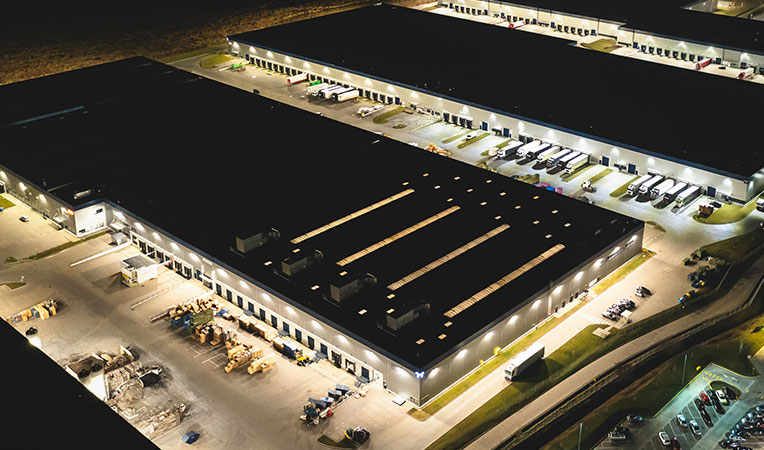
Heavy trucks pulling in and out. Machinery running 24/7. Large motors powering on and off. Industrial facilities, manufacturing plants, transportation infrastructure, and other high-use spaces place enormous physical stress on lighting. Engineers designing LED lights for harsh environments must balance the need for adequate illumination with a level of durability that can handle continuous or intermittent vibration.
Durability Becomes a Performance Requirement in High Vibration Environments
Efficiency is a core performance requirement for modern lighting systems, but lighting designers and manufacturers also understand it is only one component of total operational performance.
Dive Deeper: Specifying Lighting for Long-Term Performance
Durability is among other specifications that deliver optimal performance — and in high-use environments, it’s non-negotiable. In these spaces, repeated movement, vibration, and impact from equipment, conveyors, pumps, compressors, industrial vehicles, rail systems, and heavy machinery can introduce problems for lighting systems. If lighting is not designed with the proper level of durability, specific components and parts may suffer:
- Solder Joints: Continuous micro-vibrations can cause hairline fractures in the solder joints connecting circuit boards, which can lead to intermittent or complete circuit failure.
- Electrical Wiring: Constant shaking can loosen terminal blocks, plug-in connectors, and internal wire splices, which can disrupt power delivery and cause flickering or power failure.
- Driver Capacitors and Inductors: The LED driver’s internal components can strain their connection points during vibrations, which can eventually snap component leads or crack circuit boards if not mechanically isolated in design.
- Thermal Components: The LED circuit board and the heatsink can become separated during vibration, reducing heat transfer and potentially causing dangerous spikes in temperature during operation.
- Mounting Hardware: The bolts, brackets, hinges, and other hardware holding lighting in place can loosen or crack when sustaining vibration or repeated impact.
- Glass Lenses and Diffusers: The glass enclosures around legacy bulbs, such as incandescent or fluorescent lights, are more prone to shatter or crack under persistent shock loads and high-frequency vibration.
The challenge is unique in that lighting degradation in these environments is a cumulative effect of repeated, consistent vibration and movement rather than a single high-impact event. When mechanical stress is an issue over the entire expected life of a lighting system, durability must be considered in the engineering and component selection stages of lighting design — not after installation.
Considerations When Designing LED Lights for Harsh Environments
Lighting designers should first understand the types of strain and stress the lighting system will experience in its specific environment. For example, a manufacturing facility with heavy stamping presses can create a far different vibration profile than a warehouse adjacent to a cargo rail line.
And it isn’t just vibrations that should be accounted for in these environments. Other factors that can impact lighting performance include:
- Temperature: Will the lighting fixture or electronic parts be exposed to extreme heat or cold?
- Moisture: Will there be consistent exposure to humidity, condensation, or direct water?
- Dust and Particulates: Could airborne materials enter the fixture or interfere with thermal management?
- Chemicals: Will the fixture be exposed to abrasive or corrosive materials like oils, cleaning agents, or harsh substances?
Additionally, thermal management is a critical consideration for LED lights in harsh environments because even with all the efficiency gains in modern LEDs, they still generate heat — and designers need to account for where that heat is going to go.
Hot manufacturing facilities, enclosed transportation applications, or dusty industrial spaces can reduce or hamper thermal performance; LEDs for these environments may require specially designed heat sinks, conductive materials, unique enclosures, airflow considerations, or other strategies to effectively dissipate heat.
Connecting Design to Environment Improves an Entire Lighting System
“Durability” doesn’t mean making an existing fixture tougher. It means designing the lighting system around the environment it’s intended for from the beginning. Lighting manufacturers have an opportunity to differentiate products based on reliability and application-specific lighting, not just lumen output or reliability.
For lighting designers and specifiers, ensuring durability also means asking a broader set of questions before selecting a product — specifically, “Will this lighting system maintain optimal performance when the environment becomes difficult or harsh?”
Designing for environmental impact in the same way we currently design for high efficiency will allow LEDs, drivers, controls, and other lighting technologies to become even more sophisticated. The higher the quality and reliability of components, the more important their operational value becomes.
The goal for LED lighting is long-term reliability, something that is made far more possible when the environment’s impact on component performance is designed into the fixture.
FAQs About Lighting for High-Vibration and Harsh Environments
What type of lighting is best for high-vibration environments?
LED lighting is well suited to many high-vibration environments because it has no fragile filaments and can be engineered with durable mechanical components, protected electronics, and secure mounting systems. The specific fixture and components should still be selected based on the application’s vibration, shock, temperature, moisture, and impact requirements.
How does vibration affect LED lighting?
Repeated vibration can place mechanical stress on LED lighting components, including mounting hardware, electrical connections, drivers, circuit boards, and other electronics. Over time, this can contribute to component fatigue, loose connections, premature failure, and increased maintenance requirements.
Why is thermal management important in industrial LED lighting?
Thermal management helps control the heat generated by LEDs and electronic components. Maintaining appropriate operating temperatures can support LED and driver reliability, preserve performance, and extend system life, particularly in industrial environments where ambient temperatures may be high.
What should lighting designers consider when specifying fixtures for harsh environments?
Lighting designers should evaluate vibration and shock, temperature, moisture, dust, chemicals, physical impact, ingress protection, mounting requirements, component durability, thermal management, and maintenance access. The lighting system should be selected based on the complete operating environment rather than energy efficiency alone.
How can durable industrial lighting reduce operating costs?
Durable lighting can reduce operating costs by minimizing premature component failures, replacement frequency, maintenance labor, equipment downtime, and service access requirements. Evaluating lighting based on total cost of ownership can provide a more complete picture of value than comparing initial fixture price or energy efficiency alone.